Moisture in compressed air systems is a major concern in industrial environments, as it can damage equipment, reduce product quality, and increase maintenance costs. If not controlled properly, water in air lines can lead to corrosion, blockages, and system inefficiency.
By using the right drying methods and working with an experienced air compressor manufacturer, industries can effectively eliminate moisture and maintain reliable system performance.
Why Moisture Forms in Compressed Air Systems
Compressed air naturally contains water vapor. When air is compressed, the temperature rises, and as it cools down, moisture condenses into liquid water.
This moisture then travels through pipelines and affects tools, machines, and end products.
Problems Caused by Moisture
- Corrosion in pipelines and equipment
- Damage to pneumatic tools and valves
- Reduced product quality in manufacturing
- Blocked air lines due to water accumulation
- Increased maintenance and downtime
Methods to Remove Moisture from Compressed Air
1. Aftercoolers
Function:
Aftercoolers reduce the temperature of compressed air, causing moisture to condense.
Benefits:
- Removes a large portion of water immediately after compression
- Improves efficiency of downstream equipment
Best use:
Installed right after the compressor
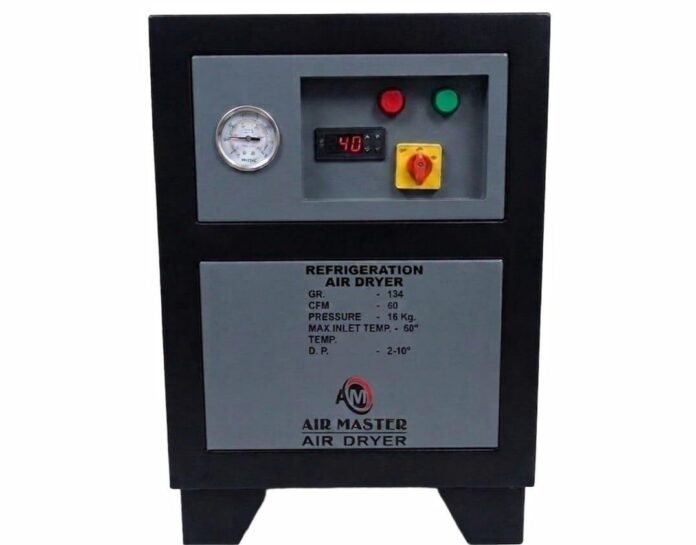
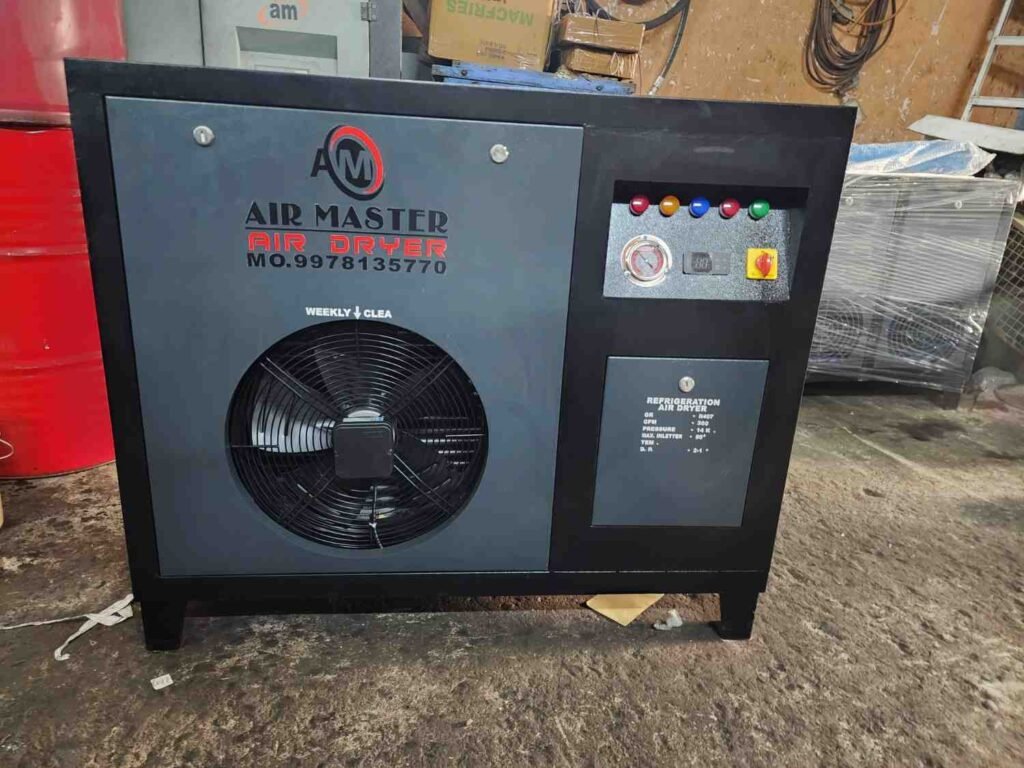
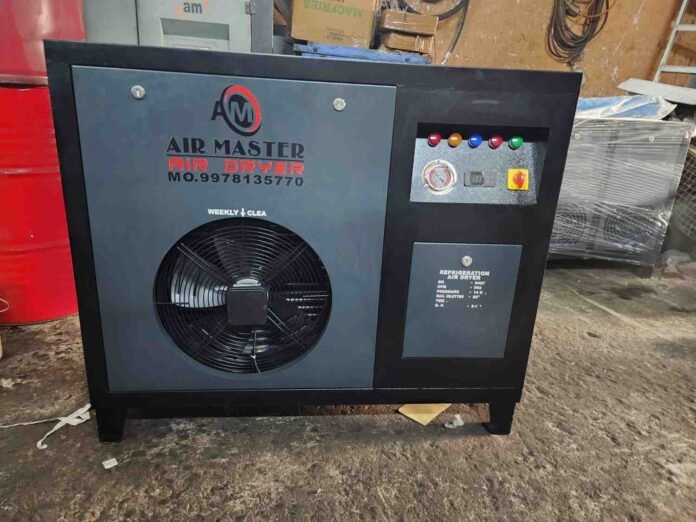
2. Air Dryers
| Type | Working Principle | Application |
|---|---|---|
| Refrigerated dryer | Cools air to remove moisture | General industrial use |
| Desiccant dryer | Absorbs moisture using drying material | High purity applications |
| Membrane dryer | Uses selective filtration | Small or specialized systems |
Benefit:
Air dryers are essential for achieving dry air in most industrial applications.
3. Moisture Separators
Function:
Separates water droplets from compressed air using centrifugal force.
Placement:
- After aftercoolers
- Before air dryers
4. Drain Systems
Types:
- Manual drains
- Automatic drains
Function:
Removes accumulated water from tanks, filters, and pipelines.
Best practice:
Use automatic drains for continuous operation
5. Proper Piping Design
| Design Factor | Benefit |
|---|---|
| Sloped piping | Prevents water accumulation |
| Drain points | Easy removal of condensate |
| Loop systems | Reduces moisture carryover |
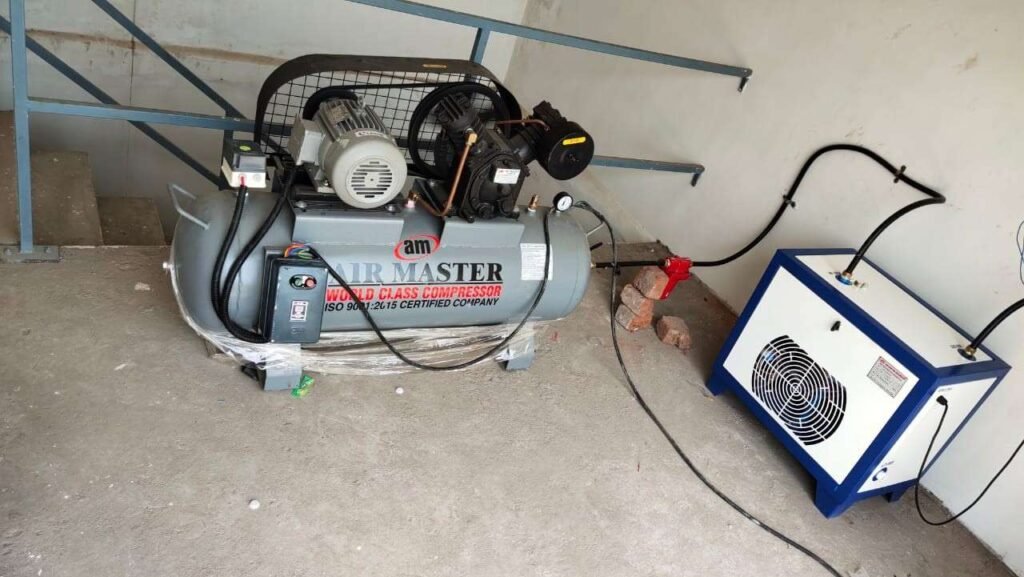
6. Air Receiver Tanks
Function:
Stores compressed air and allows moisture to settle and separate.
Additional benefit:
- Stabilizes pressure
- Reduces moisture carryover
Top air compressor manufacturers recommend proper storage and drying combinations for best results.
Step by Step Moisture Removal Process
- Install an aftercooler to reduce air temperature
- Use a moisture separator to remove condensed water
- Pass air through an appropriate air dryer
- Install filters to remove remaining particles and moisture
- Use automatic drains to remove collected water
- Maintain proper piping design to prevent accumulation
Real World Example
A manufacturing plant faced frequent equipment failures due to moisture in compressed air lines.
Problems identified:
- No air dryer installed
- Poor drainage system
- Water accumulation in pipelines
Actions taken:
- Installed refrigerated air dryer
- Added automatic drain valves
- Improved piping layout
Results:
- Significant reduction in moisture content
- Improved equipment life
- Reduced maintenance costs
Moisture Removal Methods Overview
| Method | Purpose |
|---|---|
| Aftercooler | Initial moisture reduction |
| Air dryer | Complete drying |
| Separator | Removes water droplets |
| Drain system | Eliminates collected water |
| Proper piping | Prevents accumulation |
Best Practices to Prevent Moisture Issues
- Install suitable air dryers based on application
- Maintain filters and separators regularly
- Drain condensate frequently
- Monitor humidity levels in the system
- Design pipelines to avoid water buildup
Working with reliable air compressor manufacturers ensures proper system design and long term moisture control.
FAQs
Why is moisture present in compressed air?
Because atmospheric air contains water vapor that condenses during compression and cooling.
Which air dryer is best for industrial use?
Refrigerated dryers are suitable for general use, while desiccant dryers are ideal for high purity requirements.
Can moisture damage equipment?
Yes, it can cause corrosion, wear, and malfunction of pneumatic components.
How often should drains be checked?
Automatic drains should be monitored regularly, and manual drains should be operated daily.
Is piping design important for moisture control?
Yes, proper design prevents water accumulation and improves system efficiency.
Conclusion
Removing moisture from compressed air is essential for maintaining efficiency, protecting equipment, and ensuring product quality. Using a combination of aftercoolers, dryers, separators, and proper maintenance helps eliminate moisture effectively.
In many cases, guidance from an experienced air compressor manufacturer ensures optimal system design, reliable performance, and long term operational stability.